
What changes in your mouth after 55
October 8, 2026
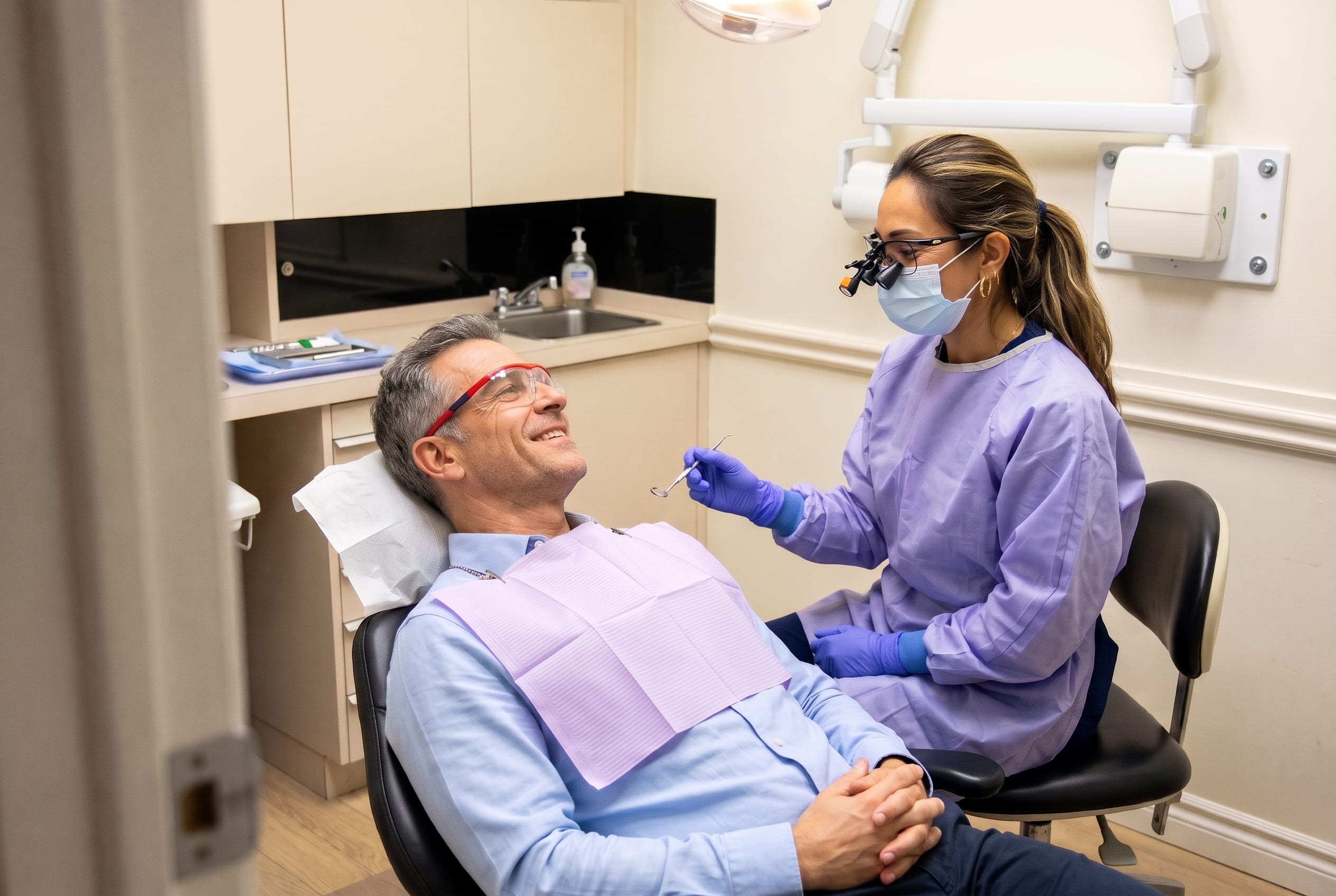
Teeth and gums change with age in ways that are fairly predictable. Medications dry the mouth and raise the risk of decay. Gums can recede and expose roots, which decay faster than enamel. Teeth wear shorter, and fillings and crowns placed decades ago reach the end of their working life. None of it is inevitable trouble, and an examination is how you find these changes early, while they are small.
Your mouth is part of the rest of you
A lot of what changes in the mouth after 55 has its roots elsewhere: in medications, in conditions like diabetes, and in the general wear of over the decades.
Medications and dry mouth
Saliva does more than people give it credit for. It rinses the teeth and neutralises the acid that causes decay, so when there is less of it, decay speeds up.
A long list of common medications reduce saliva, including some taken for blood pressure, mood, allergies and sleep. That is why a dentist asks about every medication you take, and why it is worth mentioning when anything changes. Sipping water throughout the day helps, and so does sugar-free gum. Sipping sweet drinks over a long afternoon does the opposite.
Receding gums and softer roots
As gums recede, they expose part of the root. The root surface is softer than enamel and decays faster, often right at the gumline where it is easy to miss.
For people whose decay risk is high, filling material can be part of the answer. Dr. Fenn uses a bioactive filling material for those patients, one that helps fight new cavity formation.
Teeth that wear shorter
Grinding wears teeth down, so does acid and decades of chewing. Two or three millimetres shorter is enough to change how your teeth meet each other, and worn edges chip more easily, which shortens them further.
Wear needs watching, though it does not always need treatment. If grinding is the cause, a night guard can protect the teeth against grinding while you sleep.
Old dental work reaches its limit
A filling or crown placed twenty or thirty years ago has done a great deal of work. Its edges can open up, and decay can start underneath where nobody can see it. Radiographs show what a mirror cannot, which is a good reason they are worth keeping up to date.
Gum disease
Gum disease can progress for years without hurting, and the bone it costs does not grow back on its own. How often you need a cleaning depends on your mouth, not on an insurer's schedule. Some people are fine once every 9 months. Some need one every three or four months.
Missing teeth, and teeth that move
If you have lost a tooth, an implant, a bridge or a denture can replace it, and which suits you depends on the bone and the teeth around the gap.
Teeth also drift with age. Crowding at the front that has slowly gotten worse is one of the common reasons adults choose to straighten their teeth.
The checks worth keeping up
The risk of oral cancer rises with age, and a routine examination includes a check of the soft tissues of your mouth. Along with radiographs and a look at your gums, it is the part of a checkup that catches what you cannot feel yourself.
Paying for it
We accept the Canadian Dental Care Plan (CDCP), and we bill it directly so you are not chasing the paperwork afterwards.
One thing worth knowing before you come in. The plan pays against a government fee schedule, and our fees follow the Ontario Dental Association fee guide, which is higher than the CDCP schedule. There is a difference in what you pay. Most dentists in Ontario work this way. We would rather you hear it now than at the desk afterwards. If you have private insurance, we submit those claims electronically. We take cash, debit, Visa and Mastercard.
If it has been a while since you saw a dentist, book the 80 minute examination. We will go through everything and tell you what we find. You decide what happens next.
FAQ: Addressing Common Concerns
Is dry mouth just part of getting older?
Often it is a side effect of medication. Tell your dentist what you take. It changes how they look after your teeth.
Do I still need checkups if I wear dentures?
Yes. The gums and soft tissues still need checking, and so does the fit of the denture.
How often should I have a cleaning after 55?
It depends on your mouth. Some people are fine once every 9 months, and some need one every three or four months.